麦格思维特(上海)流体工程有限公司
麦格思维特(上海)流体工程有限公司
麦格思维特(上海)流体工程有限公司
MAXIMATOR氢能解决方案:h2-well-compact,位于德国阿波尔达Apolda的移动氢气压缩机和存储解决方案
图林根州的氢创新:来自诺德豪斯的MAXIMATOR GmbH与h2-well-compact联合项目的合作伙伴一起于4月26日在 Apolda 展示了一种用于分散式应用的创新移动存储和压缩解决方案。
h2-well-compact 项目由德国联邦教育和研究部资助。该项目的目的是为分散应用开发紧凑且灵活的氢气供应系统。阿波尔达的一座小型水力发电厂使用质子交换膜电解槽生产绿氢,开发了一种创新的移动存储和压缩解决方案,以向该地区的消费者提供氢气。
计划中的拖车系统将使工业和交通领域的各种氢气应用能够更灵活高效地输送。除此外,该拖车将用于在阿波尔达提供一个新开发的紧凑型氢气加注站。符合SAE标准的紧凑型加氢站的多级储氢设计可以根据溢流原理为燃料电池汽车加氢。这消除了在加氢过程中额外压缩氢气的需要,并降低了安装和操作加氢站的成本。
Maximator具有多年积累的氢气压缩机和高压氢气技术制造商的专业知识,以及强大的技术支持项目团队,包括Bauhaus University Weimar、Energieversorgung Apolda GmbH、Fraunhofer IKTS Hermsdorf、Höschel & Baumann Elektro GmbH、Imaginata eV、IMG Electronic & Power Systems GmbH、Kyros Hydrogen Solutions GmbH 和 Rießner-Gase GmbH。
移动压缩机站组件中使用了Maximator最新一代电动液压压缩机 (EHB)。 Maximator 项目经理 Markus Wedemeyer 表示:“使用高效节能的小型一级压缩机是目前移动分散式应用氢气压缩机技术领域的基准。”此外,还规划了平台相关的外围设备,负责压缩机的供应以及氢的互联与控制。氢气加注系统由气体存储系统(3,600L储气瓶组)、电气与液压控制系统以及用于叉车加注的加氢机组成。整个项目的规划、实施、安装、调试和移交均由 Maximator 负责。
Kyros的电解槽利用水力发电厂(伊尔姆河上)的能源生产绿氢。位于赫尔姆斯多夫的Fraunhofer IKTS负责水和氢气处理。产生的氢气以高达100 bar的压力储存在由Riessner提供的18个气源钢瓶组中。Maximator的移动压缩机系统采用水力发电厂的氢气作为气源,并在现场将其压缩到六个300 bar的高压存储瓶组。到达Apolda啤酒厂后,氢气从拖车输送到Maximator的增压系统并重新压缩。成功加氢后,一辆2.5吨氢气叉车可绿色自给自足运行2个工作周。之后,必须使用移动压缩机系统重新填充拖车。
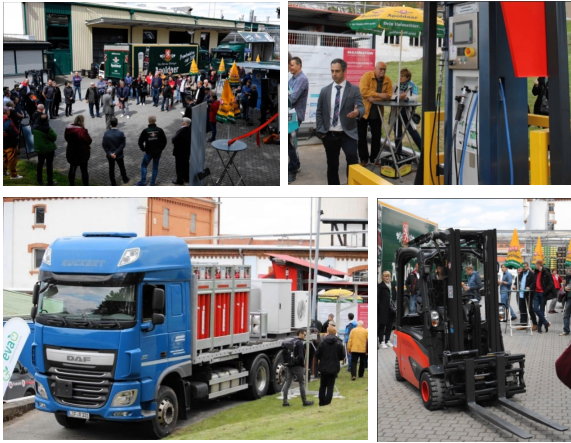
Hydrogen innovation from Thuringia: Together with the research partners in the h2-well-compact joint project, MAXIMATOR GmbH from Nordhausen presented an innovative mobile storage and compression solution for decentralized applications in Apolda on 26th April.
The h2-well-compact project is funded by the German Federal Ministry of Education and Research. The aim of the project is to develop a compact and flexible hydrogen supply system for decentralized applications. Green hydrogen is to be produced at a small hydropower plant in Apolda using a PEM electrolyzer. An innovative mobile storage and compression solution was developed to deliver the hydrogen to consumers in the region.
The planned trailer system will enable the flexible and efficient delivery of various hydrogen applications, both in the industrial and mobility sectors. Among other things, this trailer will be used to supply a newly developed compact hydrogen filling station in Apolda. A hydrogen storage cascade at the SAE-compliant compact filling station enables the refueling of fuel cell vehicles based on the overflow principle. This eliminates the need for additional compression of the hydrogen during the refueling process and reduces the costs of installing and operating the hydrogen filling station.
With its many years of expertise as a manufacturer of hydrogen compressors and high-pressure hydrogen technology, Maximator was able to optimally complement the project team comprising Bauhaus University Weimar, Energieversorgung Apolda GmbH, Fraunhofer IKTS Hermsdorf, Höschel & Baumann Elektro GmbH, Imaginata e.V., IMG Electronic & Power Systems GmbH, Kyros Hydrogen Solutions GmbH, and Rießner-Gase GmbH.
A latest-generation electric hydraulic compressor (EHB) from Maximator was used in the mobile compressor station assembly. Markus Wedemeyer, project manager at Maximator: "The use of an energy-efficient and small 1-stage compressor is currently the benchmark in the field of hydrogen compressor technology for mobile decentralized applications." In addition, a platform-related periphery was planned, which takes over the supply of the compressor and the hydrogen interconnection and control. The hydrogen filling system consists of a gas storage system (bundle storage 3,600 liters), an electrical and fluidic control system and a hydrogen dispenser for forklift refueling. The entire project planning, implementation, installation, commissioning and handover was carried out by Maximator.
An electrolyser from Kyros was used to generate green hydrogen using energy from a hydroelectric power plant (on the River Ilm). The Fraunhofer IKTS in Hermsdorf is responsible for water and hydrogen treatment. The produced hydrogen is stored at up to 100 bar in 18 cylinder bundles supplied by Riessner. A trailer from Riesner and the mobile compressor system from Maximator take over the hydrogen at the hydropower plant and compress it on site to a pressure level of 300 bar in the six trailer storage bundles. After the journey to the Apolda brewery, the hydrogen is transferred from the trailer to Maximator's filling system and recompressed. After successful transfer, a 2.5-ton hydrogen forklift truck can be operated green and self-sufficiently for approx. 2 working weeks. Afterwards, the trailer must be refilled using a mobile compressor system.
 关注公众号了解更多